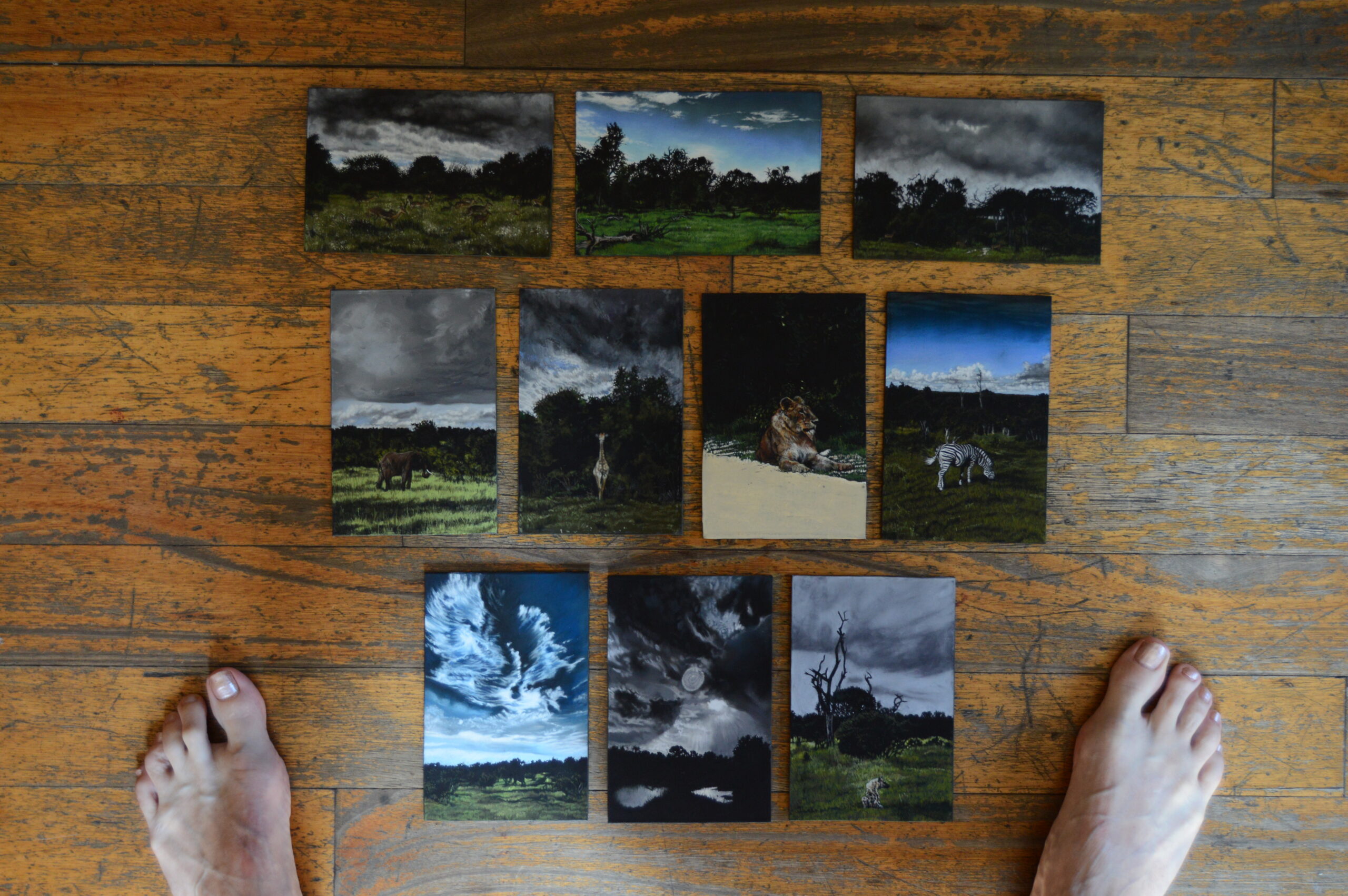
The Romantic Landscape
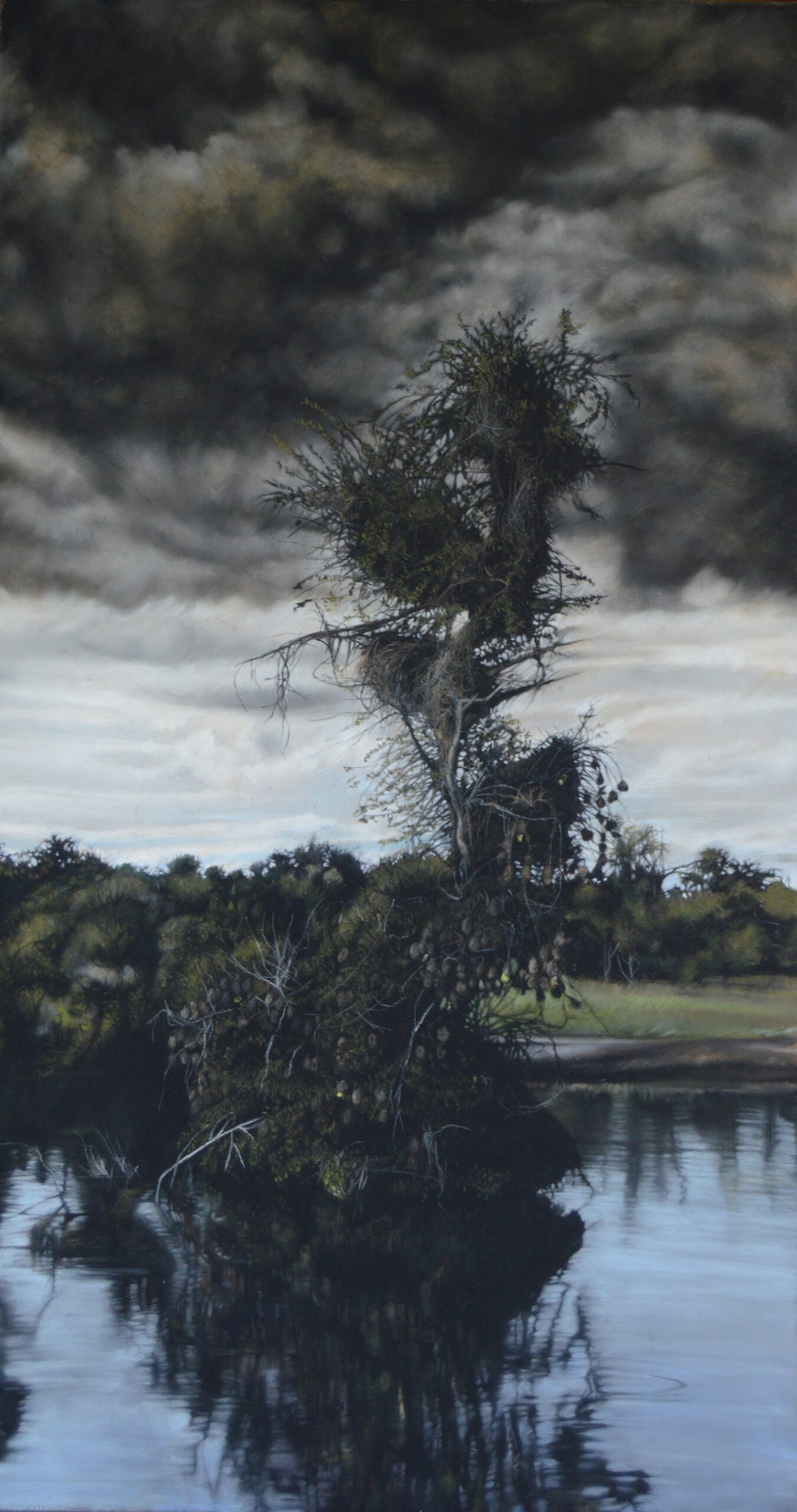
Before the Storm II
75cm x 41cm
Pastel on board
"The fever of artistic creation was upon him - all the old desires and the old exhausting joys. His genius had been lying idle, like a lion in a thicket, and now it had sprung forth ravening." -Arnold Bennett. "Buried Alive"
Whether it was a lion in a thicket or the mightily expansive views, towering clouds and haunting trees of Lion Sands game reserve - I came back from my residency on 30 December 2025, refreshed and inspired.
If you would have asked me as little as a year ago, if I would ever try my hand at landscapes, I would have said "No".
Now, I have an overwhelming longing to draw what I saw.
There, I sometimes had the feeling of witnessing something which I never even knew could exist. Every day was a surprise. Every insect and animal had a trick up its sleeve. The landscape was a changeling, transforming itself from dusty dry to luscious green, teeming with newborn animals, in a matter of days.
The loudness of it all!
The hugeness of it all.
And, the tininess...
"Any time but here, any place but now", is a phrase that I clearly remember from varsity, in connection with the Romantic era. Search the internet as I would, Google or Duck-duck AI gave back song lyrics containing similar words and patronizingly explained to me the meaning of the obverse: "There's no time like now, there's no place like here".
Was this a fake memory? I explicitly remember being taught the correct phrase as quintessentially Romantic.
After going down many rabbit holes, I found my answer as: While not existing as a formal quote during the Romantic era, the quote "Any time but here, any place but now" is frequently used by modern historians and scholars as the official "creed" or motto to describe the Romantic movement's spirit.
I can't help juxtaposing it against the popular contemporary "being in the now"...
The phrase was verbalizing the unease experienced, during that period in history, towards industrialization and reason and a longing for an Arcadian world of the past or for an unknown exotic place: A fleeing towards, and not away, from that awe inspiring nature which I experienced.
The Romantic era announced the dawn of depicting landscapes solely for what they were and not just as a back drop for some historical or mythological tale.
A week after my return to Gauteng, the weather -always threatening- turned nasty. Neighbouring Kruger Park was flooded and Sabi Sands shared in the losses. Some corpses were found - a lion, a hippo, and there was no way of gauging losses to smaller animals and insects.
Why I chose to name my main residency work "Before the storm II", I have no idea.
The concept of storm, could be a figurative one. Something bursting fourth unexpectedly. Before: the slow tension of waiting for something to happen, that we know must come.
So is it something expected or not? Or is it rather that the more we anticipate something, the greater becomes the likelihood that it will become true?
Boy: "Allá viene una tormenta!"
Linda Hamilton: "What did he just say?"
Petrol attendant: "He said there's a storm coming in"
Linda Hamilton: "I know"
-Terminator
Klein Karoo National Arts Festival 2026
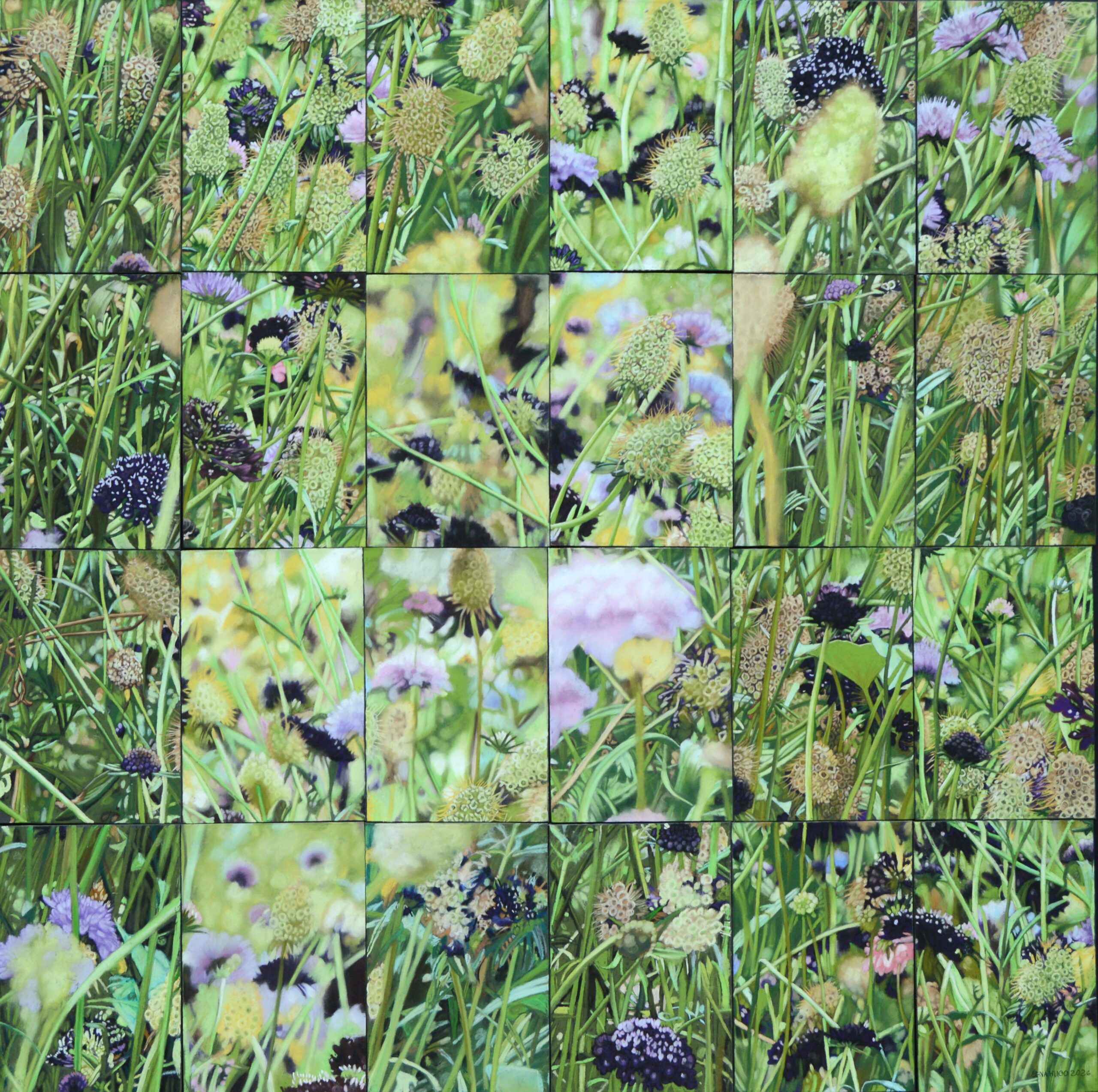
Remnants of Plant Life
61cm x 61cm
Pastel on sandpaper
by Liza Grobler
translated
This year, the Klein Karoo National Arts Festival celebrates its 30th year.
Dialogues Across Place and Time, is the theme of 2026's visual arts program. We live in interesting times with intense socio-political challenges. More and more borders are being created for presumed safety, but it is mostly driven by fear of the unknown. Sometimes it leads to wars and almost always to a sense of heightened mistrust and discord.
Dialogues across space and time is striving for a more nuanced story, one of multiple perspectives where not all the roll players need to agree, but where everybody is encouraged to share in the discussion. By way of conversation and interaction we get to know each other over barriers of language, culture and geography, and different opinions contribute to new perspectives.
Place is the manner in which we add meaning to location. Sometimes tension between a psychological sense of place and the concrete aspects of a physical place can create disparities on geographical, emotional, cultural, social, psychological, philosophical or virtual levels, but more often than not, a number of these disparities are concurrently present.
PLACE is the main exhibition with new work from each of the KKNK's previous festival artists, as well as work by two former festival curators from 1996 till now. This comprehensive exhibition brings together an exceptional group of artists in this one place, the Klein Karoo, and is a remarkable way to celebrate the 30th festival! The exhibition is hosted in the historic Prince Vintcent building and occupies various exhibition areas and two stories.
28 March - 4 April, Oudtshoorn.
The Land of Pause/The Nymph in the Desert
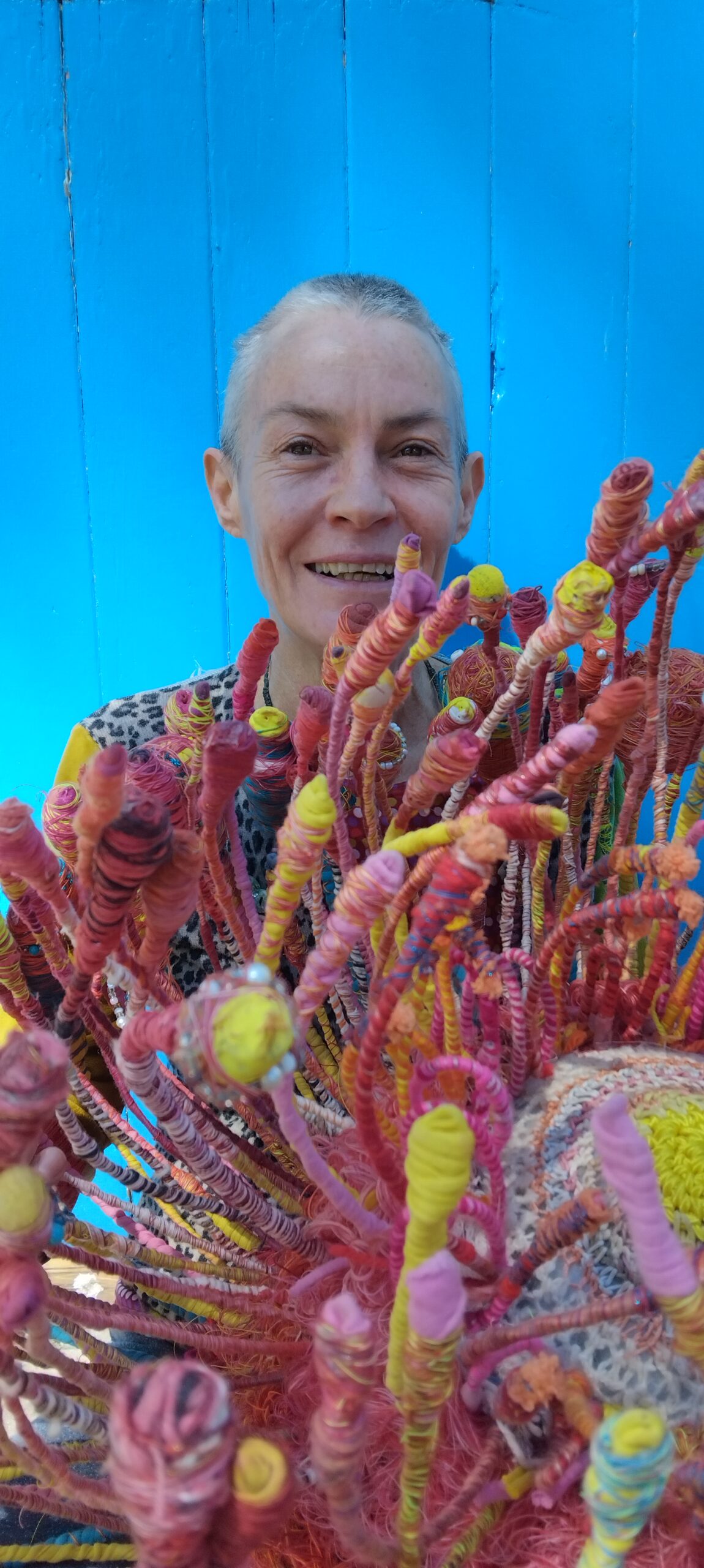
Lizel von Wielligh with one of her pin cushions
And in this place I will pause and visit, and meet, for the first time, a pen pall of sorts.
For the past 5 years, we have been friends and mutual supporters over a distance of a 1000 kilometers at least, as the crow flies, which isn't a lot in our modern era, but enough to make a first time visit a very special occasion.
The communication was in the form of Instagram voice messages, each looked forward to as one would to a letter couvered in beautiful stamps of old fashioned flowers.
During these years, we sometimes lived, what felt like parallel lives - in how we experienced nature, art, creativity and human aches and pains.
Lizel:
"Your studio is sacred, people should take their shoes off before they enter."
"That pencil sketch. Ag Lena, I see you, I see you there, al those little lines and little things and turmoil of emotions and the little animals, I feel it."
"Calm, calm, calm."
"You are drawing a threatened animal, they must be celebrated, so the 'making aware' is actually the destruction of the wine glass, here come, I'm on a roll...so the destruction of the leopard and the wine glass with the destruction of the picture, people not caring, people not paying attention, people just being oblivious of what is actually there in front of them, I don't know Lena. What do you say to that?! My good thunder. (My goeie donner).
"I'm going to leave you another message when I return - you poor thing."
Balm. We do not concentrate on our troubles, but on what we see around us. While navigating the difficulties on residency, while going through health problems, while facing art practice related client and gallery interaction and business frustrations which only other artists can ever fully understand, while experience loss of physical things, and worse - of ideas and of world views.
Lizel: "That is exactly why I never want to own things or land."
What we're going to do when I get there, I don't know. We might run around with Jezebel the dog, chasing mongeese or being chased by baboons, we might start an art project together - a "coolaaberaation", or we may just sit in silence, nurse our wounds, and be at peace.
Check out our Instagrams to see what we're up to from the 29th of March until, whenever.
@the_lizels
@lenahugoartist
Other Group Exhibitions and Events
Wildlife: Then & Now
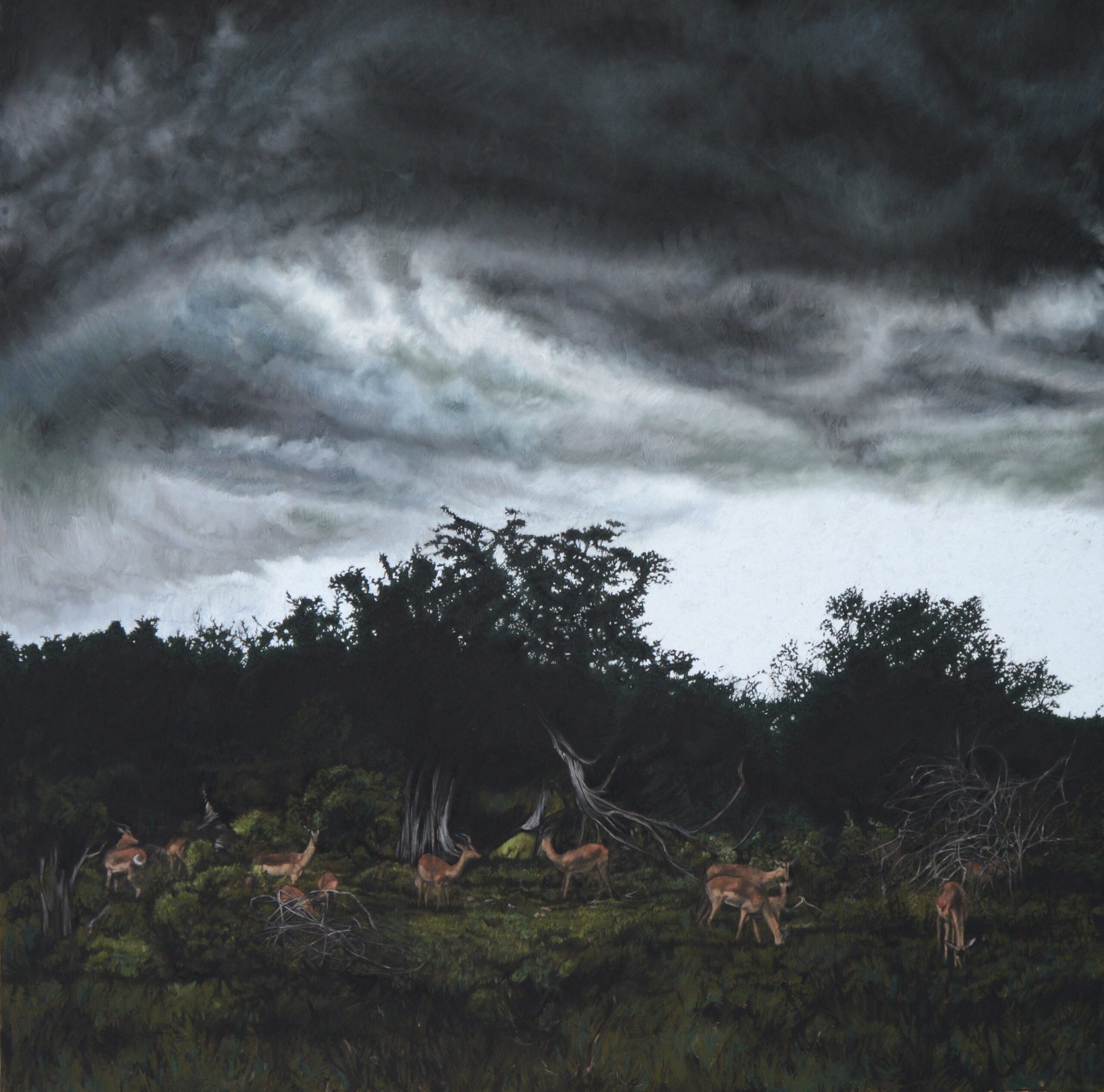
Untitled
90cm x 90cm
Pastel on board
“Wildlife: Then & Now” examines not only how wildlife is depicted, but why it has been depicted across generations. As the natural world faces unprecedented pressure, wildlife art has become both a record of what exists and a response to what is being lost.
In an era of rapid environmental change, traditional wildlife art increasingly functions as an archive of biodiversity — a reminder that what is painted today may not exist tomorrow.
25 April - 18 May, The Viewing Room Art Gallery, Pretoria.
The Art of Giving
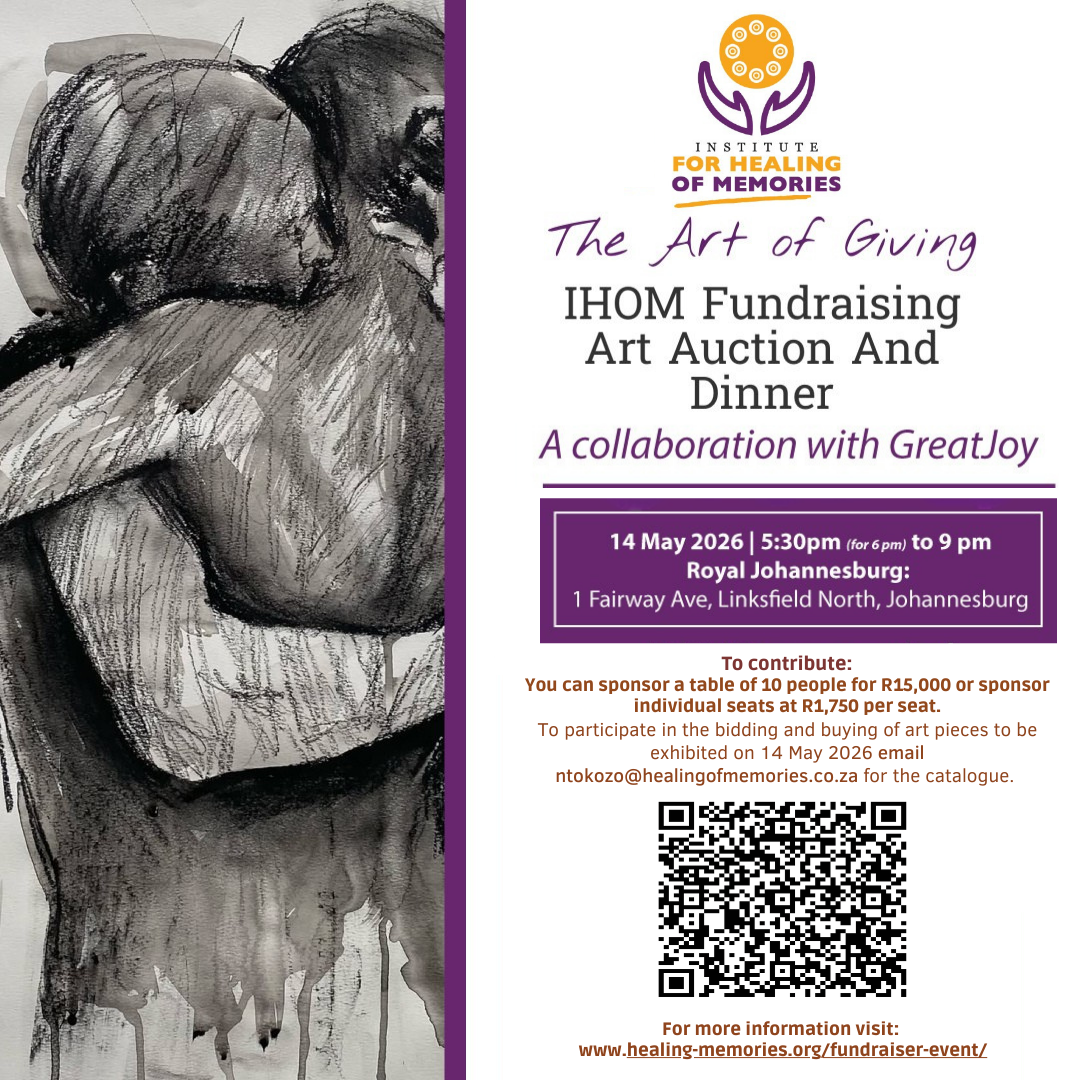
"The Art of Giving" is a fund-raising event and auction to raise much-needed funds for the not-for-profit organisation, Institute for Healing of Memories (IHOM), and its trauma healing programme, to be held on 14 May 2026 in Johannesburg.
The first healing of memories workshop was developed to run in parallel to South Africa’s Truth and Reconciliation Commission (1996-97), creating additional platforms for those who wished to share their experiences and be heard compassionately. In 1998, the Institute for Healing of Memories was established, recognising that the scars of the past continue to shape the lives, attitudes and choices of communities and our original focus remains as important today as ever.
Eve Song - A Happening
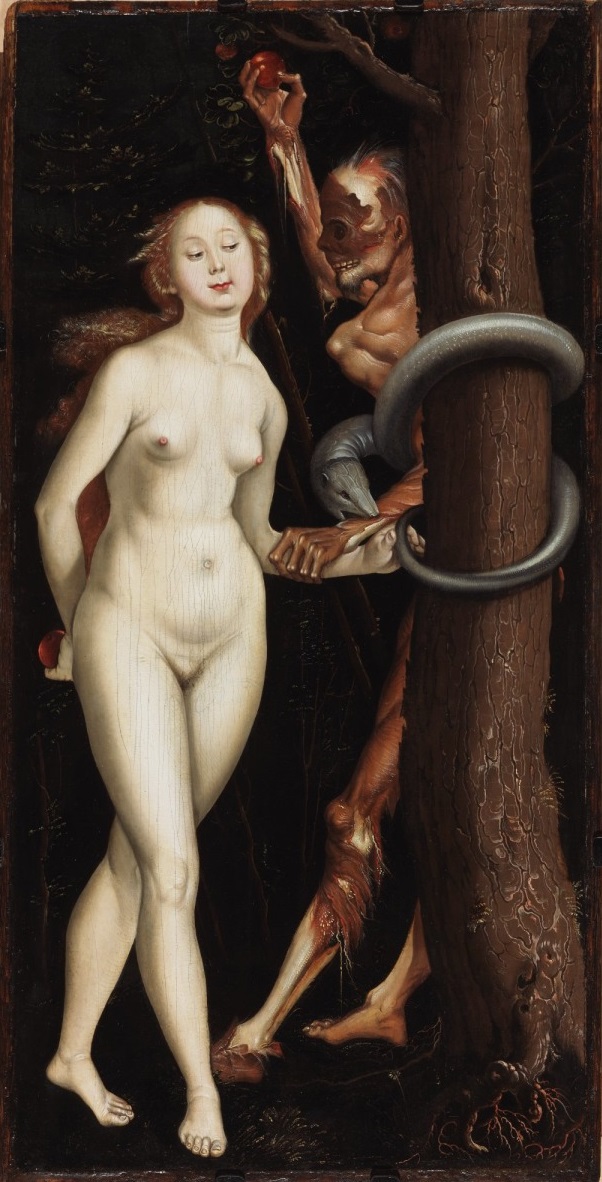
Eve, the Serpent and Death
Frans Baldung Grien
early 1510's - 1530
"Eve Song" is an interdisciplinary performance and exhibition project by selected visual multimedia artists and classical vocal performer, Ailyn Nienaber, a doctoral candidate in voice, at the University of Pretoria. The project is centred around Jake Heggie’s song cycle, Eve-Song, which reinterprets the biblical figure of Eve through a contemporary, feminist lens. Heggie’s work explores Eve as a multifaceted character, woman, mother, lover, child, and sage, highlighting themes of identity, passion, vulnerability, and wisdom.
Student Gallery, University of Pretoria
July and August
Now, as human conscience is being wounded by global powers, I can't help but thinking again that we are becoming our own ecological disaster.
And yet:
"We are an improbable and fragile entity, fortunately successful after precarious beginnings as a small population in Africa, not the predictable end result of a global tendency. We are a thing, an item of history, not an embodiment of general principle."
Stephen Jay Gould, "Wonderful life".
So how did we arrive at our current point in history, again?
How can we, as such a fragile but highly inquisitive AND acquisitive species, relate to land without having a need to own it and how do we maintain a curious attitude toward nature, without wanting to change it?
It won't hurt keeping on making art. And that is exactly what I'm going to do. Always keeping in mind that community came before art in human evolution and that we need each other to create time and space for creativity to flourish.